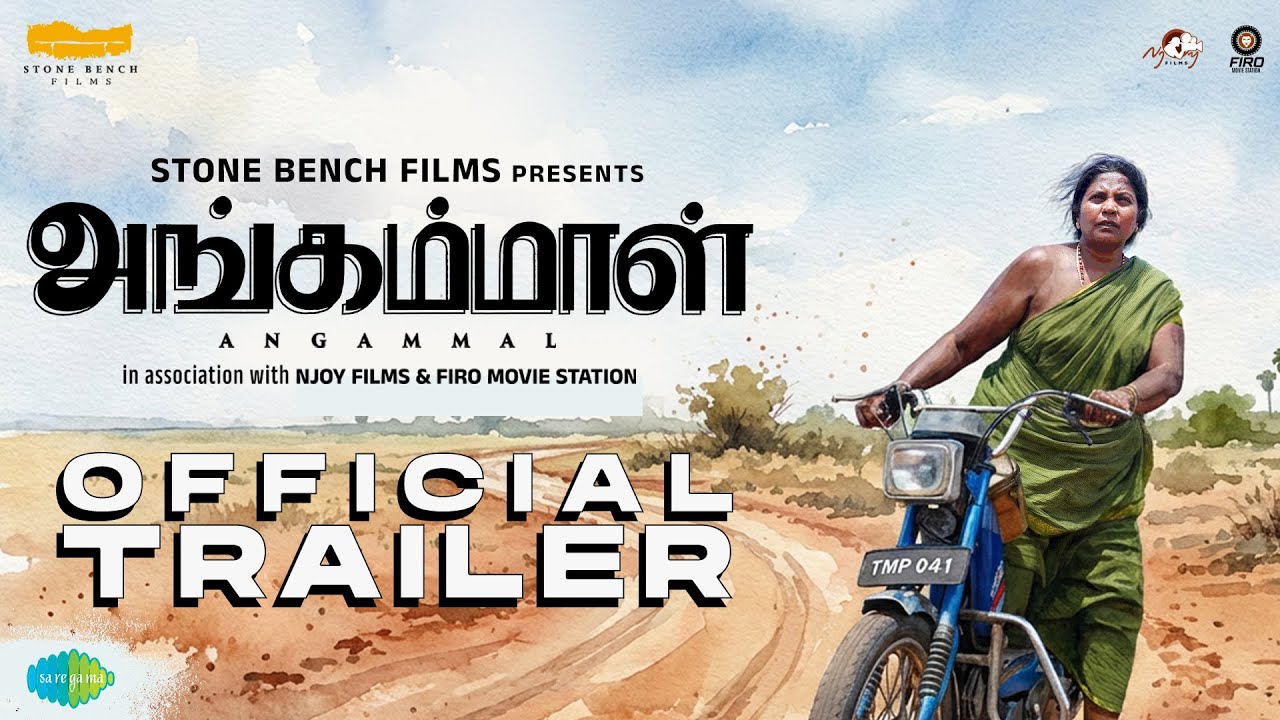
Angammal Movie 2025 Bappamtv Review Details
Angammal Review – Director Ka Vision Ekdum Next Level!
Bhai, let me tell you something. After 18 years in this blogging game, you develop a nose for directorial talent. Vipin Radhakrishnan’s work in ‘Angammal’ isn’t just good filmmaking; it’s a statement. He takes Perumal Murugan’s potent story and doesn’t just adapt it—he breathes cinema into its very soul, creating a film that’s both fiercely local and universally resonant.
Directorial Choices: The Confidence to be Quiet
Vipin’s first masterstroke is trust. He trusts his source material. He trusts his phenomenal cast, especially Geetha Kailasam, giving her the space to own the screen. He trusts silence. In an era of screaming climaxes, his biggest moments are often quiet stares, a hesitant touch, a defeated slump. The choice to avoid melodrama, to let the conflict simmer in everyday rituals, shows a director supremely confident in his story’s inherent power. The chaos of the wedding is orchestrated not for laughs, but to visually manifest the claustrophobia of tradition.
Insight: Vipin understands that in a story about rebellion against noise, the direction itself must have moments of powerful quiet.

Takeaway: Great direction is often about what you choose not to do, as much as what you do.
Signature Style: Poetic Realism with a Bite
Having reviewed 600+ films, I can spot a signature from miles away. Vipin Radhakrishnan carves his here: **Poetic Realism**. The film is grounded in the mud and sweat of village life, yet there’s a lyrical quality to its pacing and visuals. The “masala” isn’t in item songs, but in the mix of sharp, sarcastic dialogue (“poisonous playfulness”) and sudden, profound hurt. His style finds the epic in the intimate. The saga of a blouse becomes a war for personal freedom, all framed within the walls of a single household.
This is the kind of filmmaking that defines a director’s career early on. Maza aaya dekh ke.
Influences & Easter Eggs: The Literary Foundation
The biggest influence is, of course, Perumal Murugan’s literature—a world where social structures are examined with microscopic detail and deep empathy. You can sense the shadow of great Indian parallel cinema masters like Adoor Gopalakrishnan or Shyam Benegal in the observational style, but Vipin makes it his own. There are no pop-culture easter eggs. The “easter eggs” are in the behavioral details: the way a character adjusts their veshti, the specific rituals of the wedding, the unspoken hierarchies in a family gathering. These are gems for the observant viewer.
Vipin Radhakrishnan: Evolution of a Vision
| Aspect | Angammal (2025) | Notable Past Work (Short Films/Debut) | The Evolution |
|---|---|---|---|
| Handling Actors | Extracts career-best performances from a sprawling ensemble. Gives actors immense room. | Early works show a focus on naturalistic acting. | Confidence has skyrocketed. Now orchestrating complex, layered performances like a veteran. |
| Pacing & Rhythm | Masterful, slow-burn, folk-tale like pacing. Holds tension through quiet. | Tended towards tighter, shorter narrative structures. | Has learned to sit with discomfort, to let a scene breathe for maximum emotional impact. |
| Thematic Boldness | Directly tackles tradition vs. agency, female defiance within patriarchy. | Explored interpersonal relationships and smaller conflicts. | Thematic scale has expanded to socio-cultural commentary without losing human touch. |
| Visual Language | Collaborative poetry with DOP Anjoy Samuel. Every frame is composed. | Functional and effective visuals. | Has developed a distinct, artistic visual partnership, understanding cinema as a complete aesthetic. |
Cast Chemistry Under Direction: A Conductor and His Orchestra
Look at the harmony! Geetha Kailasam’s towering Angammal works because Saran Shakthi’s Pavalam reacts with just the right blend of love, confusion, and entitled frustration. The tension between Angammal and Thendral Raghunathan’s Sharadha is palpable, a credit to how Vipin must have built their dynamic off-camera. Even smaller players like Bharani (Sudalai) feel integral, not extras. The director has created an ecosystem where every performance, big or small, feeds into the same realistic, high-stakes world.
Insight: The best director-actor relationships are invisible on screen; you only see the believable world they co-create.
Future Potential: A Major Voice is Born
Mark my words: Vipin Radhakrishnan is a name we will hear for decades. ‘Angammal’ premiering at MAMI and IFFK is just the start. His future potential is immense. He can handle literary adaptations with ease, but more importantly, he can tell complex human stories with nuance and heart. I wouldn’t be surprised if he’s soon entrusted with bigger canvases—period dramas, multi-generational sagas—because he has the vision to make them intimate. He represents the exciting, rooted yet modern wave of 2025 Tamil cinema.
| Future Project Type | Why Vipin Would Excel | Directorial Challenge |
|---|---|---|
| Larger Period Drama | His eye for authentic detail and handling of social structures. | Managing bigger budgets and scale while retaining his intimate touch. |
| Urban Character Study | His skill with actors and exploring psychological layers. | Translating his poetic realism to a faster, urban milieu. |
| Multi-Story Narrative | His ability to balance an ensemble and interweave themes. | Maintaining narrative clarity and emotional focus across threads. |
Frequently Asked Questions
Is this Vipin Radhakrishnan’s debut film? → While ‘Angammal’ is his major feature film breakthrough that has garnered festival acclaim, he has prior experience in short films and writing, which honed his craft.

What is the director’s biggest challenge in this film? → Balancing the sharp, often sarcastic tone (“poisonous playfulness”) with the deep, underlying emotional hurt of the characters, without tipping into melodrama or outright comedy.
Will this director’s style work in commercial cinema? → Absolutely. His “poetic realism” and focus on strong characters is the foundation of all great commercial cinema. He just chooses to avoid formulaic song-and-fight sequences, which is a strength, not a weakness.
Ratings are purely my take after multiple watches — aapka experience alag ho sakta hai!