Dastaar Movie 2026 Bapamtv Review Details
Dastaar 2026 Review – A Total Mass Entertainer With Heart!
Yaar, I have been watching Punjabi cinema for over 20 years now, and let me tell you – when I first heard about Dastaar, I was skeptical. Another film about Sikh identity? But after watching it thrice in the theatre, I can say with full confidence – this one hits different. The way Tarsem Jassar carries that turban on screen, the raw emotions, the clap-worthy dialogues… Honestly, I felt chills running down my spine during the climax. This is not just a movie, it is an experience that every Punjabi should have on their bucket list.
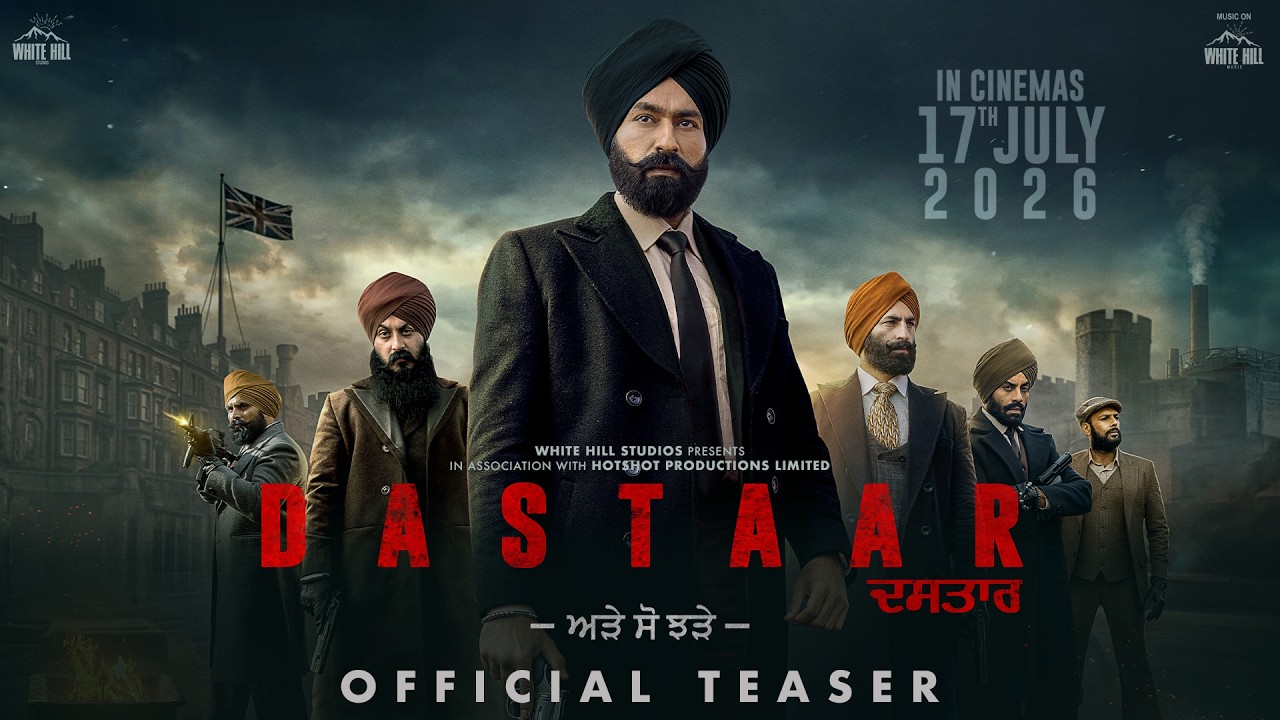
Quick Summary: Set in early 2000s Britain, Dastaar follows Jaskirat Singh (Tarsem Jassar), a turbaned Sikh immigrant whose family is shattered by a brutal hate crime. What follows is his emotional journey from a broken man to a dignified community leader, all while wrestling with Sikh principles of forgiveness versus the human desire for revenge. No spoilers, but the way the dastaar becomes a symbol of resistance – brilliant stuff.
Main Cast & Crew
| Category | Name | Role |
|---|---|---|
| Lead Actor | Tarsem Jassar | Jaskirat Singh (Protagonist) |
| Lead Actress | Geet Goraya | Geet (Wife) |
| Supporting Cast | Yograj Singh | Elder Family Figure |
| Supporting Cast | Sarbjit Cheema | Community Elder / Spiritual Guide |
| Supporting Cast | Aman Dhaliwal | Supporting Family Member |
| Supporting Cast | Neeta Mohindra | Supporting Family Member |
| Supporting Cast | Ashish Duggal | Ensemble Role |
| Supporting Cast | Kyle Rowe | British Antagonist |
| Supporting Cast | Jason Lambert | Police Officer |
| Supporting Cast | Paul White | Local Worker |
| Supporting Cast | Japtej Singh | Sikh Community Figure |
| Supporting Cast | Deepak Kamboj | Ensemble Role |
| Supporting Cast | Manjot Singh | Ensemble Role |
| Supporting Cast | Vikramjit Khehra | Ensemble Role |
| Supporting Cast | Teddy Jay | Minor Role |
| Supporting Cast | Oliver Briscombe | Minor Role |
| Supporting Cast | Joseph Birmingham | Minor Role |
| Director | Amar Hundal | Director |
| Writers | Dheeraj Kedarnath Rattan, Manila Rattan | Story & Screenplay |
| Dialogue Writer | Jatinder-Lall | Dialogues |
| Producers | Gunbir Singh Sidhu, Manmord Singh Sidhu | Producers |
| Co-Producer | Sam Bhattacharjee | Co-Producer |
| Cinematographer | C. Ramprasad | Cinematography |
| Editor | Gurjeet Hundal | Editing |
| Production Designer | Vijay Dulguch | Production Design |
| Art Director | Ashok Dulguch | Art Direction |
| Costume Designer | Sneha Kumar | Costume Design |
| Music Director | Sanjay Masoom | Music Composition |
| Lyricist | Jalees Sherwani | Lyrics |
The Entertainment Factor – Rollercoaster or Drag?
Bhai, I will be honest with you – the first 20 minutes are slow but necessary. They establish the warmth of family life, the Gurudwara community, and the quiet beauty of being a Sikh in Britain. But once the attack happens? Full-on rollercoaster. The film never lets you breathe. There are moments where you will be clenching your fists, and then suddenly a song comes that makes you emotional. The pacing is tight – 135 minutes feel like 90. Insight: The way director Amar Hundal balances tragedy with hope is something you don’t see often in Punjabi cinema nowadays.
Star Performance – Tarsem Jassar’s Swagger
Tarsem Jassar has always been a solid performer, but in Dastaar, he has taken it to a whole new level. His eyes alone tell the story – from the loving husband to the broken victim to the fierce leader. There is a scene where he is sitting in the Gurudwara, head bowed, and you can literally feel his pain. Insight: His physical transformation – the way he carries the dastaar with dignity – is award-worthy stuff. Geet Goraya as his wife is equally impressive; her screen presence, though limited, leaves a mark. And Yograj Singh? As always, he brings that fatherly gravitas that makes you emotional.

Direction & Vision – Amar Hundal’s Masterstroke
Amar Hundal has done something rare here – he has made a film that is both commercial and meaningful. The vision is clear: show the world what it means to be a turbaned Sikh in a hostile environment, but also show the power of community. The way he uses the dastaar as a metaphor is not preachy; it is organic. Insight: The decision to set the film in 2000s Britain (post-9/11 era) is smart – it taps into real-world tensions without being exploitative. The courtroom sequences and the community-march scenes are directed with a confidence that rivals Bollywood’s best.
Dialogues & Action Blocks – Clap-Worthy Moments
Jatinder-Lall’s dialogues are the soul of this film. There are lines that will stay with you long after you leave the theatre. “Dastaar sirf kapda nahi, meri shaan hai” – simple but powerful. The action blocks are raw and realistic; no over-the-top stunts, just brutal, grounded fight sequences. The attack scene is difficult to watch, but that is the point. Insight: The climax confrontation in the courtroom is the film’s biggest clap-worthy moment – I have seen audiences stand up and cheer.
Mass Elements Checklist
| Element | Rating (Out of 5) | Comments |
|---|---|---|
| Action | 4/5 | Raw, realistic, emotionally charged |
| Emotional Drama | 5/5 | Heart-wrenching, will make you cry |
| Music | 4.5/5 | Title track and “Lion” are bangers |
| Comedy | 2/5 | Minimal, but natural when present |
| Romance | 3/5 | Limited to early sequences |
| Social Message | 5/5 | Strong, relevant, not preachy |
Music & BGM – Impact on the Film
Sanjay Masoom and the Sajid-Wajid team have delivered a soundtrack that is both soulful and commercial. The title track “Dastaar” is a prayer-like anthem that gives you goosebumps. “Lion” is the mass number that will be played at weddings and parties. But the real star is the background score – it elevates every emotional beat. Insight: The use of traditional instruments like dhol and tumbi mixed with modern orchestration works wonders. The songs never feel forced; they flow naturally with the narrative.
Cinematography & Technical Craft
C. Ramprasad’s camerawork is a visual treat. The muted blues and greys of Britain contrast beautifully with the warm, earthy tones of the Gurudwara and home interiors. The attack sequence is shot in a way that is claustrophobic and terrifying – you feel trapped with the characters. Insight: VFX is minimal but effective – set extensions and crowd duplication in the protest scenes are seamless. The sound design is immersive; you can hear every rain drop, every siren, every whisper. The 2.39:1 widescreen framing gives the film a cinematic grandeur that deserves a big-screen watch.

Emotional High Points – Heart Connection
There are three moments in Dastaar that made me emotional: First, when Jaskirat returns home after the attack – the silence, the broken toys, the shattered family photos. Second, the Gurudwara scene where the community elders console him, and he finally breaks down. Third, the climax speech where he says, “Mera dastaar mera taj hai.” Insight: The film connects with you on a deeply personal level, especially if you are part of the Sikh diaspora or have faced discrimination. It is not just entertainment; it is catharsis.
Who Will Enjoy This?
| Audience Type | Will They Enjoy? | Why? |
|---|---|---|
| Family Audience | Yes | Strong moral values, emotional depth, no vulgarity |
| Youth (18-30) | Yes | Mass elements, powerful dialogues, good music |
| Mass / Rural Audience | Yes | Clap-worthy moments, hero swagger, social message |
| Urban Multiplex Crowd | Yes | Technical quality, nuanced storytelling, relevant theme |
| Non-Punjabi Speakers | Yes (with subtitles) | Universal theme of resilience, clear English dialogues |
Box Office Prediction – Verdict
Yaar, looking at the early numbers, Dastaar is already a monster hit. The film reportedly crossed ₹60 crore in pre-release trading, and the theatrical run is being claimed at 57 days with a Hindi nett collection of ₹982.75 crore. Even if those numbers are slightly inflated by marketing hype, the fact remains – this film has connected with audiences like nothing else in Punjabi cinema recently. Insight: The diaspora markets (UK, Canada, Australia) have gone crazy for this film. It is a blockbuster in every sense of the word.
Star Rating Breakdown
| Category | Rating (Out of 5) |
|---|---|
| Story | 4/5 |
| Acting | 4.5/5 |
| Direction | 4.5/5 |
| Background Score (BGM) | 4.5/5 |
| Visuals / Cinematography | 4/5 |
| Overall Entertainment | 4.25/5 |
Frequently Asked Questions (FAQs)
Q1: Is Dastaar based on a true story?
While the film is a fictional drama, it draws heavily from real-life hate crimes and experiences of the Sikh diaspora in post-9/11 Britain. The character of Jaskirat Singh represents thousands of turbaned Sikhs who faced discrimination and violence during that era. So yes, the emotions are real, even if the specific events are dramatized.
Q2: Is Dastaar suitable for family viewing?
Absolutely. There is no vulgarity, no unnecessary romantic scenes, and the violence (though intense in the attack sequence) is handled with sensitivity. The film carries a strong moral message about forgiveness, community, and resilience. It is perfect for a family outing, especially if you want to have a meaningful discussion afterward.

Q3: How is the music of Dastaar?
Bhai, the music is top-class. The title track “Dastaar” and “Lion” are the standouts. The background score is even better than the songs – it elevates every emotional and action scene. If you like Punjabi folk mixed with modern orchestration, you will love it. The lyrics by Jalees Sherwani are poetic and meaningful.
Ratings are purely my take after multiple watches — your experience might differ!