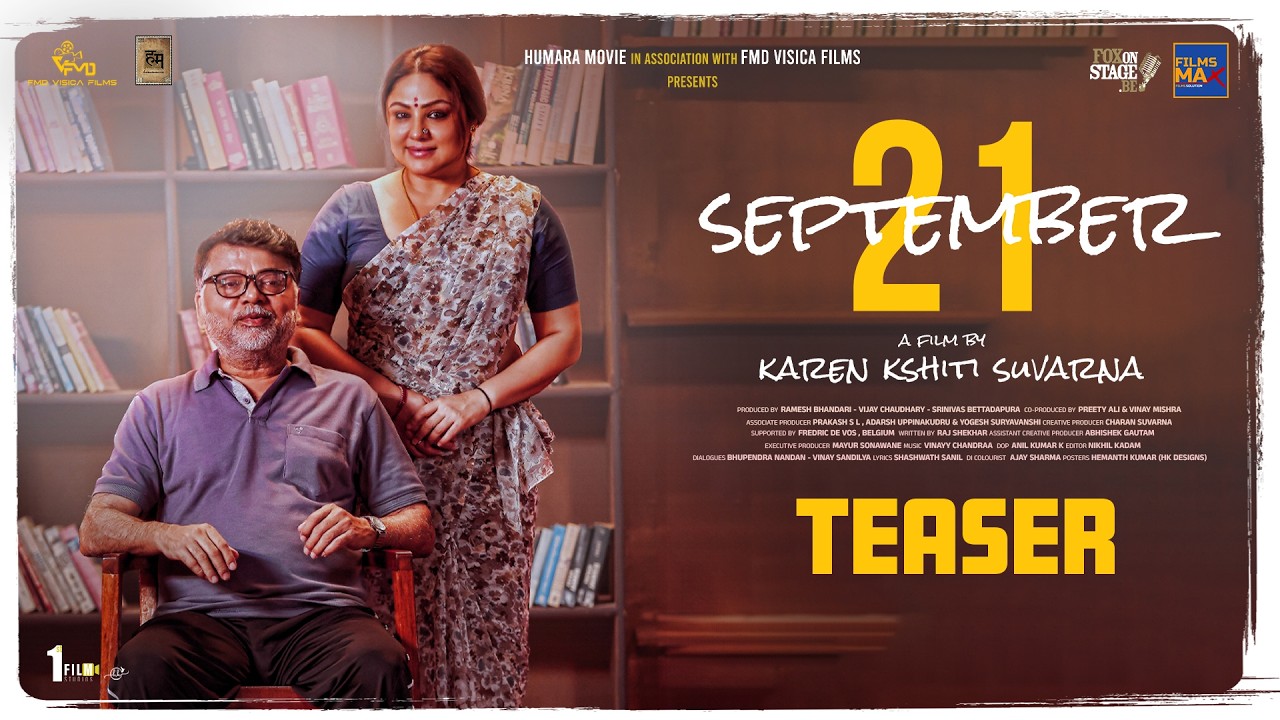
September 21 Movie 2026 Bapamtv Review Details
September 21 (2026) Review – A Tearful, Triumphant Debut That Will Shake Your Soul!
Let me tell you something, friends. After four decades of watching films, you develop a kind of sixth sense. You can smell a pretentious “message movie” from a mile away. So, when I sat down for *September 21*, my guard was up. But what this young team has crafted didn’t just lower my guard—it shattered it completely, leaving me in a state of quiet, profound reflection long after the credits rolled.
The film is a delicate, unflinching look into the world of an Alzheimer’s patient and the family that cares for him. It’s not a plot-heavy thriller, but a deeply emotional journey that maps the slow erosion of memory and the immense, often invisible, burden of love and duty that caregivers carry. Endorsed by the Alzheimer’s Society of India, its power lies in its heartbreaking authenticity.
| Role | Name |
|---|---|
| Director | Karen Kshiti Suvarna |
| Story | Raj Shekhar |
| Dialogues | Vinay Sandilya, Bhupendra Nandan |
| Music & BGM | Vinayy Chandraa |
| Cinematography | Anil Kumar K |
| Lead Actor (Patient) | Pravin Singh Sisodia |
| Lead Actress (Caregiver) | Priyanka Upendra |
| Veteran Actress | Zarina Wahab |
| Supporting Cast | Amit Behl, Ajit Shidhaye, Ricky Rudra |
The Entertainment Factor: A Soulful Journey, Not a Joyride
If you’re walking in expecting whistles and six-packs, turn back. The entertainment here is of a different, more lasting kind. It’s the gripping tension in a silent dining room, the heartbreaking beauty in a forgotten lullaby, the emotional release of a simple, understood glance. Director Karen Kshiti Suvarna, in a shockingly mature debut, understands that real drama simmers in the quiet moments. The film demands your patience and pays you back with immense emotional dividends.
Star Performance: A Masterclass in Restraint
Pravin Singh Sisodia delivers a performance that should be studied. As the man fading into the fog of Alzheimer’s, he uses his eyes and subtle body language to convey a universe of confusion, fear, and fleeting clarity. There’s no grandstanding, just heartbreaking truth. Priyanka Upendra is his perfect counterpoint, her face a canvas of suppressed exhaustion, love, and despair. The legendary Zarina Wahab adds layers of generational wisdom and pain, making this ensemble cast one of the most believable family portraits seen on screen in years.

Direction & Vision: A New Voice Arrives
At just 22, Karen Kshiti Suvarna directs with the sensitivity of a veteran. Her vision is clear: no melodrama, no manipulation. She trusts her actors and the power of the situation. The camera doesn’t intrude; it observes. She strips away all the noise of typical Bollywood storytelling to focus on the raw human emotion at the core, making the film’s social message—endorsed by ARDSI—feel earned and powerful, not preachy.
Dialogues & Action Blocks: The Power of Silence and a Repeated Question
Forget punchlines; the most clap-worthy moments here are sighs and silences. The dialogues by Vinay Sandilya and Bhupendra Nandan are sparse, real, and often devastatingly simple. The real “action blocks” are the emotional set-pieces: a repeated question that becomes more tragic each time, a moment of misplaced mistrust, or a sudden, clear memory that vanishes as quickly as it came. These scenes linger far longer than any stunt sequence.
| Mass Elements Checklist | Rating (Out of 5) | Verdict |
|---|---|---|
| Action | 0.5 | Not that kind of film. |
| Songs | 4 | Soulful, integrated beautifully. Kailash Kher’s teaser track is a gem. |
| Comedy | 1 | Only in fleeting, bittersweet moments of levity. |
| Romance | 5 | The ultimate romance—of unwavering care and duty. |
| Emotional Punch | 5 | The core currency of the film. Pack tissues. |
Music & BGM: The Soundtrack of a Fading Mind
Vinayy Chandraa’s work is the film’s emotional nervous system. The background score is minimalist, using ambient sounds, echoes, and gentle piano notes to put you inside the patient’s disorienting world. The songs, like the beautiful teaser track rendered by Kailash Kher, aren’t interruptions but extensions of the grief and love on screen. The music doesn’t tell you how to feel; it makes you feel what the characters are experiencing.
Cinematography & Technical Craft: Visual Poetry
Anil Kumar K’s camera work is a lesson in empathetic cinematography. The framing is intimate, often using shallow focus to mirror the fragmented perception of the protagonist. The colour palette, graded by DI Colorist Ajay Sharma, subtly drains of vibrancy as memories fade, yet finds warmth in the caregiver’s touch. The editing by Nikhil Kadam is patient, allowing scenes to breathe and their emotional weight to fully settle on the audience.

Emotional High Points: Connecting With Your Own Heart
This is where the film truly wins. It doesn’t force connection through tragedy-porn. It earns it by showing the universal: the fear of losing a loved one while they’re still there, the guilt of impatience, the unconditional love of a parent that persists even when the mind fails. You will inevitably see flashes of your own family, your own fears, and your own capacity for love. That is its greatest triumph.
| Who Will Enjoy This? | Yes/No | Why? |
|---|---|---|
| Family Audiences | Yes, but with caution. | A vital watch for adult families to understand caregiving, but emotionally heavy for very young viewers. |
| Youth (Seeking Entertainment) | Maybe | Only if they appreciate nuanced, slow-burn cinema over fast-paced entertainment. |
| Mass (Single Screen) Crowd | Likely No | The subject and pacing are tailored for multiplex and critical appreciation. |
| Lovers of Meaningful Cinema | Absolute Yes | This is a benchmark for sensitive, issue-based filmmaking in India. |
Box Office Prediction: A Critic’s Darling, A Niche Winner
Let’s be real. This isn’t a 300-crore blockbuster in the making. It’s a film that will find its audience slowly, through word-of-mouth and critical acclaim. It will do very well in urban multiplexes and on festival circuits. With a modest budget, it has a strong chance of being a profitable and, more importantly, impactful venture. Its real “box office” is the conversation it will start in living rooms across the country about dementia and caregiving.
| Star Rating Breakdown | Rating (Out of 5) |
|---|---|
| Story & Emotional Depth | ★★★★★ |
| Acting & Performances | ★★★★★ |
| Direction & Vision | ★★★★½ |
| Music & Background Score | ★★★★½ |
| Cinematography & Visuals | ★★★★★ |
| FINAL VERDICT | ★★★★½ |
Frequently Asked Questions (FAQs)
1. Is September 21 too depressing to watch?
It is emotionally heavy, yes, but not depressingly so. The film balances the pain with profound moments of human connection, love, and resilience, leaving you with a sense of catharsis rather than just sadness.
2. How accurate is its portrayal of Alzheimer’s?
Extremely accurate. The film is endorsed by the Alzheimer’s and Related Disorders Society of India (ARDSI), which suggests its depiction of the disease’s progression and the caregiver’s struggle is authentic and responsible.

3. Is this a remake of a Malayalam or Kannada film?
It is part of a multilingual project. The story is originally by Raj Shekhar (in Malayalam), and teasers were released in both Kannada and Hindi. This Hindi version is a dedicated adaptation for the pan-Indian audience.
Ratings are purely my take after multiple watches — your experience might differ!