Habeebi Movie 2026 Bapamtv Review Details
Habeebi 2026 Review – A Soulful, Heart-Touching Family Drama That Stays With You Long After The Show!
Yaar, when I first heard the title “Habeebi” – meaning “My Beloved” in Arabic – I honestly thought it might be one of those glossy, over-the-top romantic films. But after watching this Meera Kathiravan directorial, I can tell you, it’s nothing like that. This film touched my heart in places I didn’t expect. It’s like a warm cup of sulaimani chai on a rainy evening – comforting, aromatic, and deeply satisfying. Let me take you through this beautiful journey.
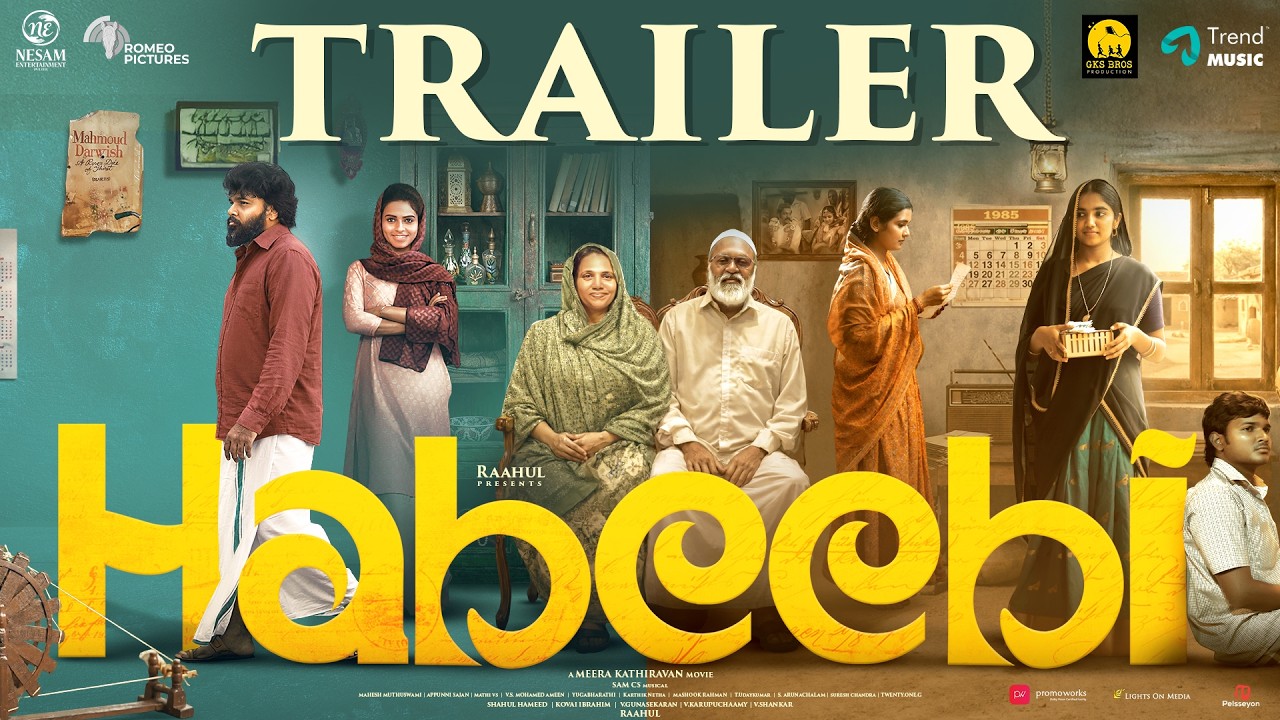
Quick Gist: Set in the small town of Tenkasi in southern Tamil Nadu, Habeebi revolves around Mohammad Yusuf (Kasthuri Raja), a gentle patriarch of a Tamil-Muslim household, and his family’s everyday struggles with modernity, tradition, faith, and love. The film doesn’t have a loud plot or a villain – it’s about the quiet battles we fight within our own homes and hearts. The story follows Nilofer Nisha (Malavika Manoj) and another key female character (Esha M.) as they navigate dreams, relationships, and community expectations. It’s a slice-of-life drama that feels deeply personal and universally relatable at the same time.
Main Cast & Crew
| Role | Name | Character |
|---|---|---|
| Lead Actress | Esha M. | Central female protagonist, emotional anchor of the film |
| Lead Actor (Veteran) | Kasthuri Raja | Mohammad Yusuf – the kind, principled patriarch |
| Lead Actress | Malavika Manoj | Nilofer Nisha / Nilavu Pulla – a young woman with big dreams |
| Supporting Actress | Anusreya Rajan | Key family member, adds emotional depth |
| Supporting Actress | Dhanashree Sudhakaran | Pivotal supporting role in the family ensemble |
| Supporting Actor | Arulkumar | Male relative/community figure, adds conflict |
| Director | Meera Kathiravan | Known for Aval Peyar Tamizharasi and Vizhithiru |
| Music Director | Sam C.S. | Composed the soulful “Salam Habeebi” soundtrack |
| Lyricists | Kannur Shereef, Raheem Athavanad | Sufi-leaning, devotional, folk-inflected lyrics |
| Producer & Distributor | Romeo Pictures (Raahul) | Mid-budget, critically ambitious project |
The Entertainment Factor – Not a Rollercoaster, But a Gentle Boat Ride
Let me be honest with you, bhai. If you’re expecting a mass masala entertainer with hero introduction scenes, item numbers, and whistle-worthy dialogues, this is not your film. Habeebi is a slow-burn, contemplative drama. The entertainment here comes from the authenticity of everyday life – the way a mother scolds her daughter, the way the family sits together for iftar, the way children fight over the TV remote. It’s the kind of entertainment that makes you nod and say, “Ha, exactly!” It’s not a drag, but it does require patience. Think of it more like a good book you savor slowly, not a fast-food thriller.
Star Performance – Kasthuri Raja Is the Soul of This Film
Kasthuri Raja sir has done something remarkable here. He doesn’t shout, he doesn’t deliver punchlines, he doesn’t even have a big action scene. But his eyes – yaar, those eyes speak volumes. As Mohammad Yusuf, he embodies a man who wants to live without hurting anyone, and that quiet dignity is incredibly powerful. Malavika Manoj as Nilofer Nisha is a revelation. She brings such naturalness to her role – you don’t feel like you’re watching an actress, you feel like you’re watching a real girl from Tenkasi. Esha M. matches her beat for beat, and their scenes together have a lovely, unforced chemistry. Anusreya Rajan and Dhanashree Sudhakaran provide solid support, making the family feel real and lived-in.

Direction & Vision – Meera Kathiravan’s Gentle Mastery
Meera Kathiravan has done something quite brave. She has taken a specific cultural milieu – a Tamil-Muslim household in southern Tamil Nadu – and made it universal. Her direction is restrained, non-judgmental, and deeply empathetic. She doesn’t exoticize the community or fall into stereotypes. The camera observes rather than intrudes. She allows scenes to breathe, letting conversations unfold naturally. The film’s pacing might frustrate some, but it’s a deliberate choice that serves the narrative. Her vision is clear: show love in its most ordinary, profound forms. And she succeeds beautifully.
Dialogues & Action Blocks – Silence Speaks Louder Than Words
There are no “mass” action blocks here, but there are some truly clap-worthy moments. Not the kind where you whistle, but the kind where you feel a lump in your throat. The dialogues are written in a beautiful mix of Tamil and Urdu, preserving the community’s authentic speech patterns. One line from Kasthuri Raja’s character – “Ennala yarayum valikanum nu thonathu” (I don’t want to hurt anyone) – becomes the film’s emotional thesis. There’s a scene where a character argues about education with an elder, and the way the dialogue navigates respect and rebellion is brilliant. The silences between conversations often say more than the words themselves.
Mass Elements Checklist – What Works and What Doesn’t
| Element | Rating (Out of 5) | Notes |
|---|---|---|
| Action / Conflict | ⭐⭐ (2/5) | Very little action; conflict is internal and subtle |
| Songs & Music | ⭐⭐⭐⭐⭐ (5/5) | “Salam Habeebi” soundtrack is a masterpiece of Sufi-Tamil fusion |
| Comedy | ⭐⭐⭐ (3/5) | Gentle, situational humor, not slapstick |
| Romance | ⭐⭐⭐⭐ (4/5) | Subtle, realistic, no over-the-top drama |
| Emotional Connect | ⭐⭐⭐⭐⭐ (5/5) | This is where the film truly shines |
Music & BGM – Sam C.S. Delivers a Soul-Stirring Soundtrack
The music in Habeebi is not just background – it’s a character in the film. Sam C.S. has composed the “Salam Habeebi” album, and yaar, every single track grows on you. Songs like “Ennil Odivarum” and “Innallo Kalyana Naal” are not just beautiful melodies – they are woven into the narrative fabric. The Sufi influences in tracks like “Kannuneeril Mungi” add a spiritual dimension. The background score is minimalistic but effective – using piano, strings, and ethnic percussion to underscore the emotional beats. The call-to-prayer sounds that appear in the ambient mix give the film an authentic sonic texture. Trust me, you’ll be searching for this album on JioSaavn after the movie.
Cinematography & Technical Craft – A Visual Love Letter to Tenkasi
The cinematography is stunning in its simplicity. The film uses natural lighting and handheld camerawork to create a documentary-like feel. The warm, earth-toned color grading – the ochre of old Muslim houses, the green of neem trees, the muted blues of mosque walls – immerses you completely. Wide-angle lenses capture family gatherings with spatial intimacy. The sound design deserves special mention: the ambient sounds of street vendors, children playing, distant temple bells, and azaan echoes create a rich, multi-faith environment. There are no heavy VFX here – just pure, honest filmmaking that trusts its story and performances.

Emotional High Points – The Heart of Habeebi
The film’s emotional core is the relationship between Mohammad Yusuf and his children/grandchildren. There’s a scene where Yusuf sits alone after a family argument, and Kasthuri Raja acts it with such vulnerability that it broke me. The bond between Esha M. and Malavika Manoj’s characters is another highlight – their moments of unspoken understanding are beautiful. The wedding sequence with the song “Innallo Kalyana Naal” is bittersweet and moving. The climax doesn’t give you a big dramatic payoff; instead, it offers quiet resolutions – a departure, a reconciliation, a shared meal – that feels deeply satisfying. This is the kind of film that makes you call your family after watching.
Who Will Enjoy This?
| Audience Type | Will They Enjoy? | Reason |
|---|---|---|
| Family Audiences | ✅ Yes, absolutely | Relatable family dynamics, no vulgarity, universal themes |
| Youth (15-25) | ✅ Mostly yes | If they appreciate slow, meaningful cinema; may find it slow otherwise |
| Mass/Mainstream Fans | ⚠️ Depends on taste | Those expecting action and fast pacing may get restless |
| Fans of Realistic Cinema | ✅ Highly Recommended | This is their kind of film – authentic, emotional, well-crafted |
| Art/Festival Circuit | ✅ Strong Appeal | Perfect for film festivals and critical acclaim |
Box Office Prediction – Steady, Not Spectacular
Habeebi is not aiming for records. It’s a mid-budget, content-driven drama releasing on May 28, 2026. Romeo Pictures has positioned it as a critically ambitious project. Early trade estimates suggest a modest opening, but strong word-of-mouth could carry it to a steady run. I’d predict ₹10-20 crore nett in Tamil Nadu if it clicks with family audiences in tier-2 cities. Overseas, limited screens but loyal Tamil-Muslim diaspora audiences may add ₹1-3 crore. Don’t expect Parasakthi numbers – but this film’s real value will be in its OTT afterlife and festival recognition.
Star Rating Breakdown
| Category | Rating (Out of 5) | Comments |
|---|---|---|
| Story & Screenplay | ⭐⭐⭐⭐ (4/5) | Simple yet profound, though pacing may test some |
| Acting Performances | ⭐⭐⭐⭐½ (4.5/5) | Kasthuri Raja and Malavika Manoj are outstanding |
| Direction | ⭐⭐⭐⭐½ (4.5/5) | Meera Kathiravan’s vision is clear and empathetic |
| Music & Background Score | ⭐⭐⭐⭐⭐ (5/5) | Sam C.S. delivers a career-best soundtrack |
| Visuals & Cinematography | ⭐⭐⭐⭐ (4/5) | Natural, warm, and immersive; not flashy but effective |
Frequently Asked Questions
1. Is Habeebi a mass entertainer or a slow film? Should I take my family?
Bhai, Habeebi is definitely a slow, contemplative film. It’s not a mass entertainer with action and fast comedy. But if your family appreciates heartfelt, realistic dramas about everyday life, then yes – it’s a wonderful film to watch together. No vulgarity, no violence, just pure emotion. Go with an open mind and patience.
2. Is the music good? Will I like the songs if I’m not familiar with Sufi/Tamil-Muslim music?
Absolutely! Sam C.S. has created a beautiful soundtrack that transcends cultural boundaries. Even if you’re not familiar with Sufi influences, the melodies are so soulful and well-composed that they will grow on you. Songs like “Ennil Odivarum” and “Innallo Kalyana Naal” are universally appealing. Give it a chance – you’ll be humming them for days.

3. Is this film only for Tamil-Muslim audiences, or will others also connect?
This is a great question. While the film is deeply rooted in a Tamil-Muslim milieu, its themes – family, love, generational conflict, dreams vs. tradition – are completely universal. Meera Kathiravan has told a specific story with universal emotions. Any Indian who has grown up in a close-knit family, regardless of religion, will find something to relate to. Highly recommended for those who love meaningful cinema.
Ratings are purely my take after multiple watches — your experience might differ!