Nooru Saami Vijay Antony Movie 2026 Bapamtv Review Details
Nooru Saami Vijay Antony 2026 Review – A Hard-Hitting Family Drama That Will Leave You Emotional!
Yaar, I walked into the theatre with zero expectations, but by the interval I was wiping my eyes. This is not your typical mass masala film – this is a slap on our society’s face, and it hurts so good.
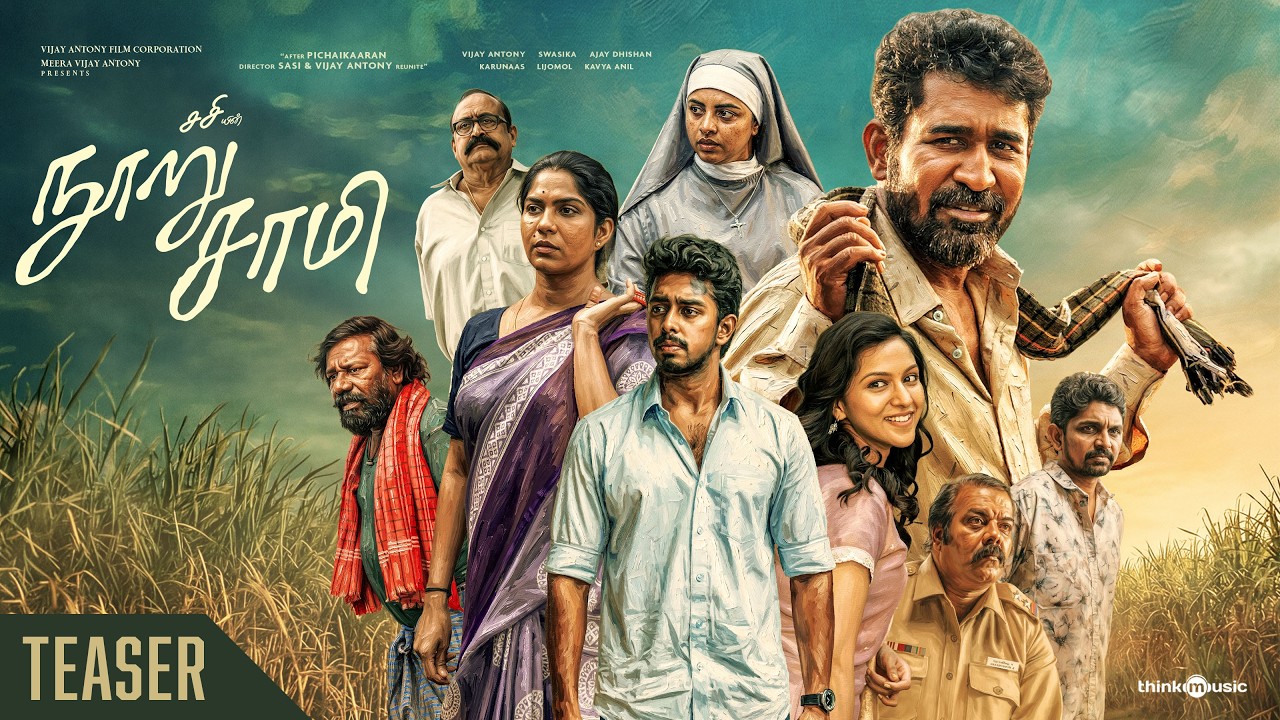
Set in a rustic Tamil village where sugarcane fields stretch as far as the eye can see, Nooru Saami tells the story of a simple farmer (Vijay Antony) whose world turns upside down when his family gets caught in a vicious caste-based scandal. His wife (Swasika Vijay) is accused of something that shakes the entire community, and suddenly, this peaceful man has to choose between his community’s rigid rules and his own conscience. The film is a raw, unfiltered look at how caste prejudice can destroy families from inside.
Main Cast & Crew
| Role | Name | Character Description |
|---|---|---|
| Lead Actor | Vijay Antony | Central protagonist – a farmer caught between caste norms and personal ethics |
| Female Lead | Swasika Vijay | Woman whose alleged transgression triggers social ostracism |
| Supporting Role | Ajay Dhishan | Close family member who mediates or intensifies the tension |
| Pivotal Role | Lijomol Jose | Sister or relative caught in the moral crossfire |
| Significant Role | Kavya Anil | Layered character with emotional symbolism |
| Comedy/Grounded Role | Karunas | Balances the heavy tone with natural humor |
| Authoritative Figure | Balaji Sakthivel | Morally ambiguous village elder or headman |
| Conflict Driver | Aruldoss | Caste-conscious patriarch |
| Rustic Character | Munishkanth | Earthly village figure used for emotional/comic relief |
| Director | Sasi | Known for socially rooted dramas – reunites with Vijay Antony after Pichaikkaran |
| Producer | Fathima Vijay Antony & Vijay Antony | Creative control and distribution interest |
| Music Composer | Balaji Sriram | Folk-infused, rustic score |
| Cinematographer | Not officially named | Natural-light, handheld style for village sequences |
| Editor | Long-time Sasi collaborator | Linear, emotion-driven cut |
The Entertainment Factor – Rollercoaster or Drag?
Honestly, this is not a film you watch for mindless entertainment. The first half sets up the family dynamics beautifully, and you feel like you are living in that village. The tension builds slowly, and when the conflict hits, it hits hard. There are moments where you will be clenching your fists in anger. But yes, the pacing is slow – if you are used to high-octane action every 10 minutes, you might find the middle portions a bit heavy. But for those who appreciate emotional depth, this is pure gold.
Insight: The film’s strength lies in its refusal to rush. Every silence, every glance, every tear is given time to settle. That is rare in today’s cinema.
Star Performance – Vijay Antony’s Career-Best?
Vijay Antony has always been an underrated actor, but here he delivers something truly special. His character is not a hero with punch dialogues – he is a broken man trying to hold his family together. There is a scene where he just sits on his field, staring at the crops, with tears rolling down. No dialogue. Just pure emotion. That is the kind of acting that stays with you. Swasika Vijay matches him beat for beat – her vulnerability is so real that you want to protect her. Lijomol Jose and Ajay Dhishan add so much weight without overacting.

Insight: Watch out for the scene where Vijay Antony confronts the village elders. His controlled anger is more powerful than any loud performance.
Direction & Vision – Sasi Knows His Terrain
Sasi is a director who understands the Tamil rural landscape like the back of his hand. He does not glamorize the village – he shows it as it is, with all its dirt, beauty, and harshness. His camera lingers on the sugarcane fields, the temple streets, the thatched roofs, making you feel the heat and dust. The way he handles the caste issue is mature – he does not preach, he just shows what happens when society turns against one of its own. The only slight drawback is that the second half feels a bit stretched in places.
Dialogues & Action Blocks – Clap-Worthy Moments
The dialogues are written with raw power. There is no artificial heroism – just real conversations that cut deep. One line where Vijay Antony tells his son, “Unakku idhu artham aagalaam, aana un perusa iruka koodadhu” (You may understand this now, but you should not become like them) – that line got huge claps in my show. The action is minimal and realistic – mostly physical confrontations and emotional clashes. The big confrontation scene in the third act is so intense that people were whistling.
Mass Elements Checklist
| Element | Rating (out of 5) | Notes |
|---|---|---|
| Action | 3/5 | Realistic, not over-the-top. Focus on emotional impact |
| Songs | 4/5 | Folk-infused, soulful. Title track is a gem |
| Comedy | 2.5/5 | Karunas provides light moments, but not a laugh riot |
| Romance | 3.5/5 | Mature, subtle. More about emotional bond than physical |
Music & BGM – Balaji Sriram Strikes Gold
The music is a character in itself. Balaji Sriram has used folk instruments like nadaswaram and thappu to create a sound that is pure Tamil soil. The title track “Nooru Saami” will give you goosebumps – it plays at key emotional moments and elevates the whole experience. The background score is restrained – no unnecessary orchestras. Just soft piano and flute when the heart needs to feel. The agitation song during the protest scene is so powerful that it became an instant earworm.
Insight: The BGM during the climax scene is haunting. I still get chills thinking about it.

Cinematography & Technical Craft – Raw and Real
The visuals are not glossy – they are earthy and real. The camera work uses natural light beautifully, capturing the golden hues of sunrise over sugarcane fields. The handheld shots during confrontations make you feel like you are right there in the middle of the chaos. There is minimal VFX – just some environmental enhancements and crowd extensions. The sound design is superb – you can hear the wind rustling through the crops, the temple bells, the cattle sounds. It immerses you completely.
Emotional High Points – Where Your Heart Will Break
There are three scenes that will stay with me forever. First, when Swasika’s character is publicly humiliated and Vijay Antony cannot do anything – the helplessness in his eyes. Second, the scene where the family sits together for a meal but no one eats – the silence says everything. And third, the climax confrontation – I won’t spoil it, but bring tissues. This film does not shy away from showing the pain of being an outcast in your own community.
Who Will Enjoy This?
| Audience Type | Will They Enjoy? | Reason |
|---|---|---|
| Family Audiences | Yes (with caution) | Strong emotional core, family bonds, but heavy themes |
| Youth | Mixed | May find pacing slow, but will appreciate social message |
| Mass Audience | Yes | Vijay Antony’s performance and confrontation scenes deliver |
Box Office Prediction – Decent Success
Nooru Saami released on 1 May 2026 with modest expectations. Early reports show good footfalls in district centers and single screens, with multiplex response being average. The budget is mid-range, and given the positive word-of-mouth from family audiences, the film is expected to recover its costs comfortably. Trade analysts call it a “decent success” – not a blockbuster, but a profitable venture that will find a longer life on OTT platforms. The film’s social relevance might also drive repeat viewings in rural areas.
Star Rating Breakdown
| Category | Rating (out of 5) |
|---|---|
| Story & Screenplay | 3.5/5 |
| Acting Performances | 4.5/5 |
| Direction | 4/5 |
| Music & BGM | 4.5/5 |
| Visuals & Cinematography | 3.5/5 |
Frequently Asked Questions
1. Is Nooru Saami based on a true story?
Yes, the producers say it is loosely inspired by real-life incidents related to caste prejudice and social ostracism in Tamil villages. It is presented as a “family biopic” that could happen to anyone.
2. Can I watch this film with my family?
Yes, but be prepared for some intense and emotional scenes. The caste conflict theme is handled maturely, but younger children might find certain confrontations disturbing. It is best for families with teenagers and above.

3. Is this film better than Pichaikkaran?
That is a tough comparison. Pichaikkaran was a commercial hit with a strong social message. Nooru Saami is more emotionally layered and slower in pace. If you like raw, realistic dramas over mass entertainers, you might actually prefer this one. But for pure entertainment value, Pichaikkaran edges ahead.
Ratings are purely my take after multiple watches — your experience might differ!