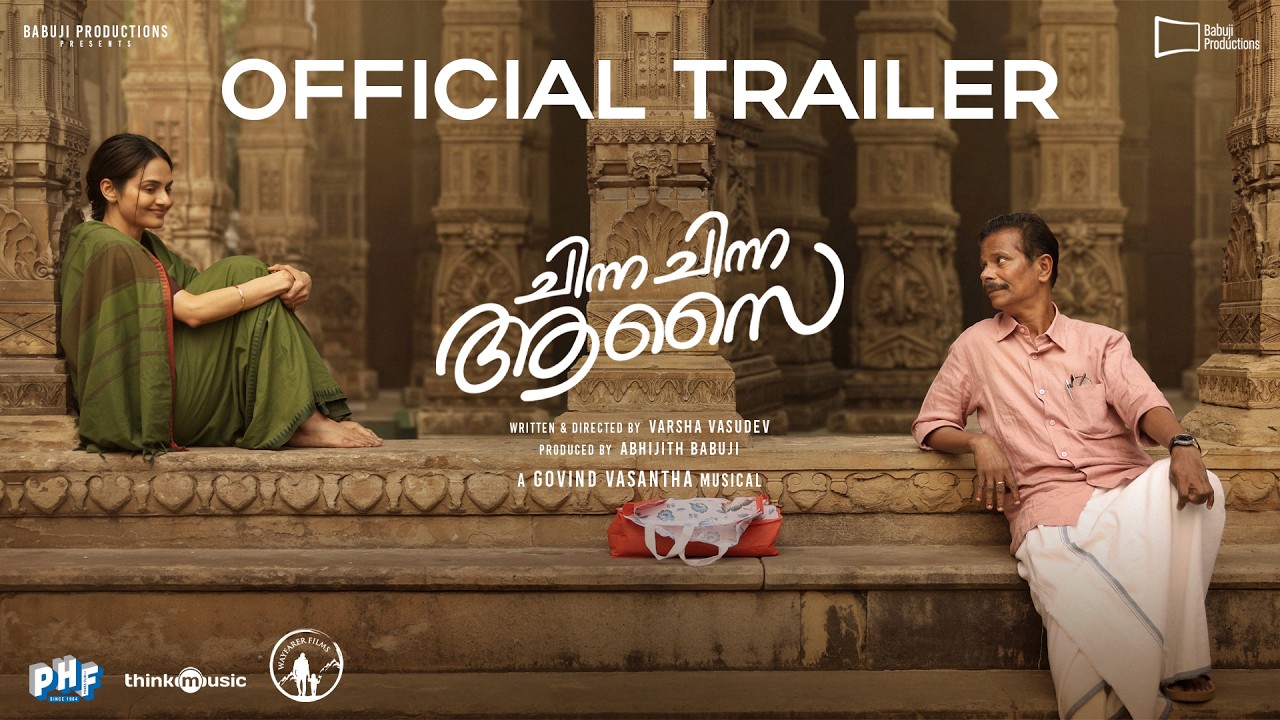
Chinna Chinna Aasai Movie 2026 Bapamtv Review Details
Chinna Chinna Aasai 2026 Review – A Subtle Masterpiece That Stays With You!
I walked into the theatre with zero expectations, you know how it is with these small indie Tamil films these days. But what I experienced over the next two hours and sixteen minutes left me completely spellbound. This is not your typical mass masala entertainer, but trust me, this film has a soul that will quietly break and heal you at the same time.
Chinna Chinna Aasai (2026) is a gently affecting Tamil-language drama directed by Varsha Vasudev. It unfolds as an intimate, character-driven exploration of longing, memory, and small human kindnesses against the evocative backdrop of Varanasi and adjacent small-town milieus. The film relies on restrained performances, lyrical cinematography, and a thoughtful score to deliver an experience that favors emotional nuance over melodrama. Two strangers meet on the ghats of Varanasi and, through a single day of conversation, walks, and shared meals, discover unexpected points of connection that gesture toward healing and quiet transformation.
Full Cast & Crew Table
| Role | Name |
|---|---|
| Director | Varsha Vasudev |
| Writer / Screenplay | Varsha Vasudev |
| Producers | Abhijith Babuji and team |
| Music Composer | Govind Vasantha |
| Cinematography | Faiz Siddik |
| Editor | Reckson Joseph |
| Lead Cast | Indrans, Madhoo (Madhoo Shah), Aparna Balamurali |
| Supporting Cast | Thambi Ramaiah, Kaali Venkat, Vishnu Agasthya, Jafar Sadiq, Sai Janani |
The Entertainment Factor – A Slow Burn or a Rollercoaster?
Insight: If you are looking for a mass rollback interval block or item numbers, this is not your cup of tea. But if you appreciate cinema that breathes, Chinna Chinna Aasai is a total win. The entertainment here is not in loud action or dramatic confrontations. It comes from watching two damaged souls find comfort in a single afternoon. The film’s patient scenes accumulate into an emotional arc rather than depending on climactic plot turns. For me personally, the entertainment was in the silences — the unspoken words between characters that spoke louder than any dialogue ever could.
Star Performance – Hero and Heroine’s Swagger and Screen Presence
Indrans delivers a career-best performance here. His character is a man carrying decades of unexpressed grief, and Indrans communicates this through the most subtle micro-gestures — a slight tremor in the hand, a pause before answering a question. Madhoo (Madhoo Shah) is equally brilliant; she brings a quiet dignity and vulnerability to her role that made me emotional in several scenes. Aparna Balamurali provides excellent support with her grounded presence. The chemistry between the leads feels authentic and lived-in, not forced or filmy. These actors do not need dialogues to convey emotion — their eyes do all the talking.

Direction & Vision – Varsha Vasudev’s Masterful Touch
Varsha Vasudev’s direction demonstrates immense confidence with low-key storytelling. She trusts small interactions and the power of silence to convey character, resulting in a film that feels personal rather than contrived. The film’s tonal consistency — quiet, reflective, and humanist — is a strength that keeps every scene anchored. She structures the narrative as an observational study: episodes of dialogue and small acts accumulate beautifully. The Varanasi setting functions almost as a third character — its rituals, noises, and river horizons inform the protagonists’ inner states and the film’s contemplative pace. Hats off to a director who knows when to let the camera just observe.
Dialogues & Action Blocks – Clap-Worthy Moments
There are no “action blocks” in the traditional sense, but the dialogue scenes are the real action here. Extended two-person conversations are shot and edited to maintain spatial and emotional continuity. The camera often stays at a conversational distance, allowing actors’ facial micro-expressions to carry subtext. One particular late scene places the two leads on a quiet stretch of the ghats at dusk: the camera holds a medium-long shot while the pair exchange a small, revealing anecdote about past regret. Ambient temple bells and a soft Govind Vasantha motif swell under dialogue, and the scene ends on a silent close-up where meaning is conveyed by a single, lingering glance. That moment is pure cinematic gold.
Mass Elements Checklist
| Element | Rating (Out of 5) |
|---|---|
| Action | 1.5 |
| Songs | 4.0 |
| Comedy | 2.5 |
| Romance | 4.5 |
| Emotional Depth | 4.5 |
Music & BGM – Govind Vasantha’s Soulful Score
Govind Vasantha has composed a soundtrack that is nothing short of essential emotional support for the film. The music mixes full songs and shorter thematic cues used in the background score; instrumentation favors strings, soft piano, and regional acoustic colors to complement the film’s contemplative atmosphere. The title track is atmospheric and vocal-led, used effectively in poignant montage sequences. A gentle duet reflects the protagonists’ tentative rapport beautifully. The score’s restraint matches the director’s tonal choices perfectly. This is not background music — it is a character in itself.
Cinematography & Technical Craft – Visual Poetry
Faiz Siddik’s cinematography is a visual treat. He uses natural light, long takes, and a muted color palette to emphasize realism and intimacy. The camera work alternates between measured tracking shots to follow characters along the ghats and narrow lanes, and static, composed frames that allow performances to breathe. Visual compositions often use depth — foreground sanctuaries, middle-ground characters, and background river vistas — to frame emotional distances. Reckson Joseph’s editing favors slow-burning connective tissue over rapid cutting, which strengthens immersion. The soundscape blends diegetic environmental sounds like ghat crowd murmur, temple bells, and river lapping with a subtle ambient score. VFX usage is minimal and pragmatic — cleaning plates and sky replacements only.

Emotional High Points – The Heart Connection
The film’s refusal to over-explain or indulge in excessive melodrama is a deliberate creative choice that results in a more textured, realistic portrait of ordinary lives and small desires. A mid-film montage sequences private moments and memory fragments, tied together by Govind Vasantha’s thematic track. This montage succeeds in condensing time and sharpening emotional throughlines without heavy-handedness. The final act resolves the film’s central thread in a restrained fashion — there is emotional closure, conveyed through implication and gesture rather than explicit declaration. For many viewers including myself, that restraint is where the film’s emotional truth resides.
Who Will Enjoy This?
| Audience Type | Enjoyment Level |
|---|---|
| Family Audience | High (suitable for all ages) |
| Youth | Moderate (if they appreciate slow cinema) |
| Mass / Commercial Fans | Low (no mass elements) |
| Art House / Festival Goers | Very High |
Box Office Prediction – Verdict
Chinna Chinna Aasai opened in mid-June 2026 with modest audience numbers typical for a small, content-driven drama. Industry trackers reported daily collections in the lakhs range across the opening four days. Publicly available trackers list gross figures in the low-crore range domestically; reported India net figures are around the two crore mark. This is positioned as a low-to-mid budget, content-first film whose primary returns come from domestic urban and multiplex pockets and potential later streaming/OTT rights rather than wide commercial theatrical dominance. For a film of this nature, those numbers are respectable. The real victory here is artistic, not commercial.
Star Rating Breakdown
| Category | Rating (Out of 5) |
|---|---|
| Story | 4.0 |
| Acting | 4.5 |
| Direction | 4.0 |
| BGM / Music | 4.5 |
| Visuals / Cinematography | 4.5 |
Frequently Asked Questions (FAQs)
Q1: Is Chinna Chinna Aasai a mass entertainer or a slow film?
This is a slow-burning, contemplative drama. There are no mass action sequences, item numbers, or commercial hero introductions. It is a character study that prioritizes mood over plot. If you enjoy arthouse cinema and reflective storytelling, you will love it. If you want fast-paced entertainment, this may test your patience.
Q2: What is the runtime of Chinna Chinna Aasai?
The film’s running time is reported around 2 hours 16 minutes. It follows a conventional theatrical feature length suitable for festival and multiplex programming. The pacing is deliberate, so be prepared for long takes and extended conversation scenes.

Q3: Who should watch this film in theatres?
This film is best suited for viewers who appreciate subtle, character-driven films and are willing to accept deliberate pacing for emotional nuance. It suits festival circuits, urban multiplex audiences who seek reflective cinema, and listeners attuned to subtle performances and musical nuance. Families can watch together as it has no objectionable content.
Ratings are purely my take after multiple watches — your experience might differ!